Concrete analysis
Engine evaluation, candidate moves and principal variations show where the position changed and what tactical resource was available.
Training Methodology
How your games become a useful training plan: find the recurring problem, practice it and return to your next games.
Rating and win rate describe outcomes. The training loop looks at the decisions that produced them.
Games, color, result, time control, clock data and opening moves establish what actually happened.
Stockfish analysis and position features identify costly decisions, missed resources and critical moments.
One mistake is an example. Repeated mistakes across games become a training priority.
Forgy connects the strongest evidence to puzzles, opening lines, timed decisions or review positions.
Later games and verified exercises show whether the targeted decision is becoming more reliable.
Engine evaluation, candidate moves and principal variations show where the position changed and what tactical resource was available.
Known course moves and opening positions are interpreted as repertoire knowledge. A playable book move should not become a puzzle only because the engine slightly prefers another plan.
Threats, checks, captures, loose pieces, king safety and move purpose are used to turn a numerical swing into a concrete explanation.
Training priority is shaped by several signals, not a single average.
Illustrative position
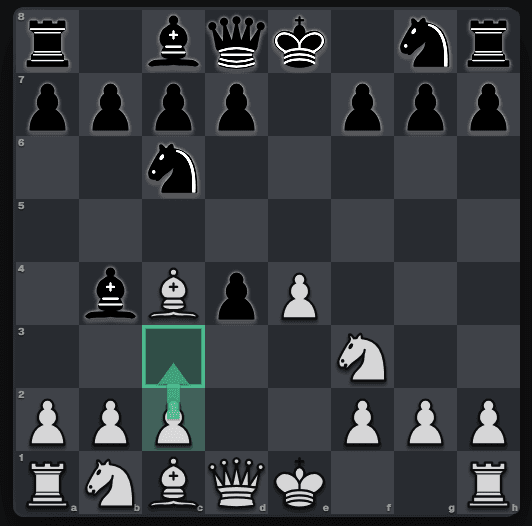
c3 · One move protects your king and challenges the bishop on b4.
ChessForgePro uses confidence labels because two games cannot support the same conclusion as fifty. Filters for period, color and time control also change which evidence is relevant.
Recommendations link back to games, opening lines or exercises. Move explanations can be previewed on the board so the reason is visible rather than hidden behind a score.